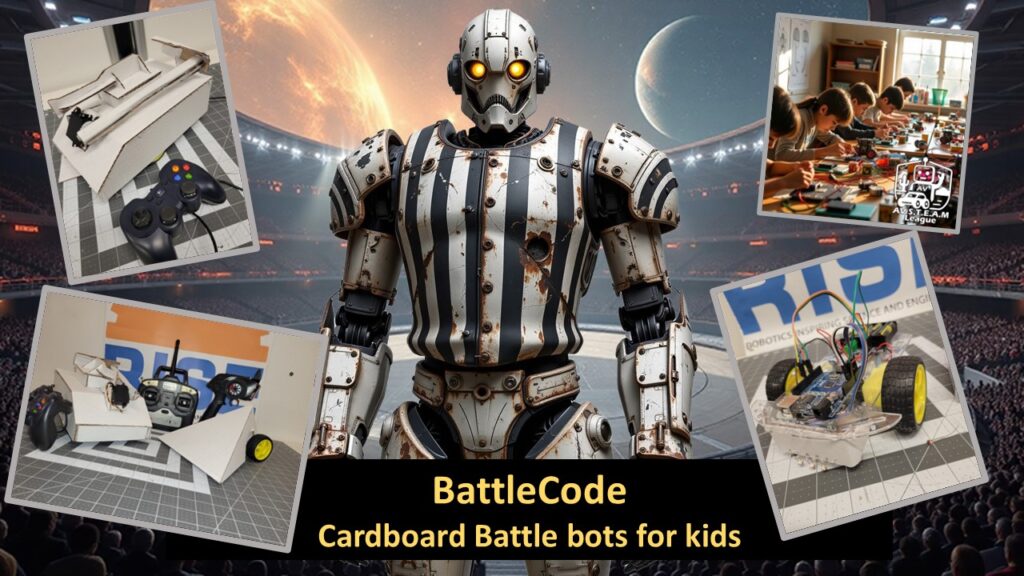
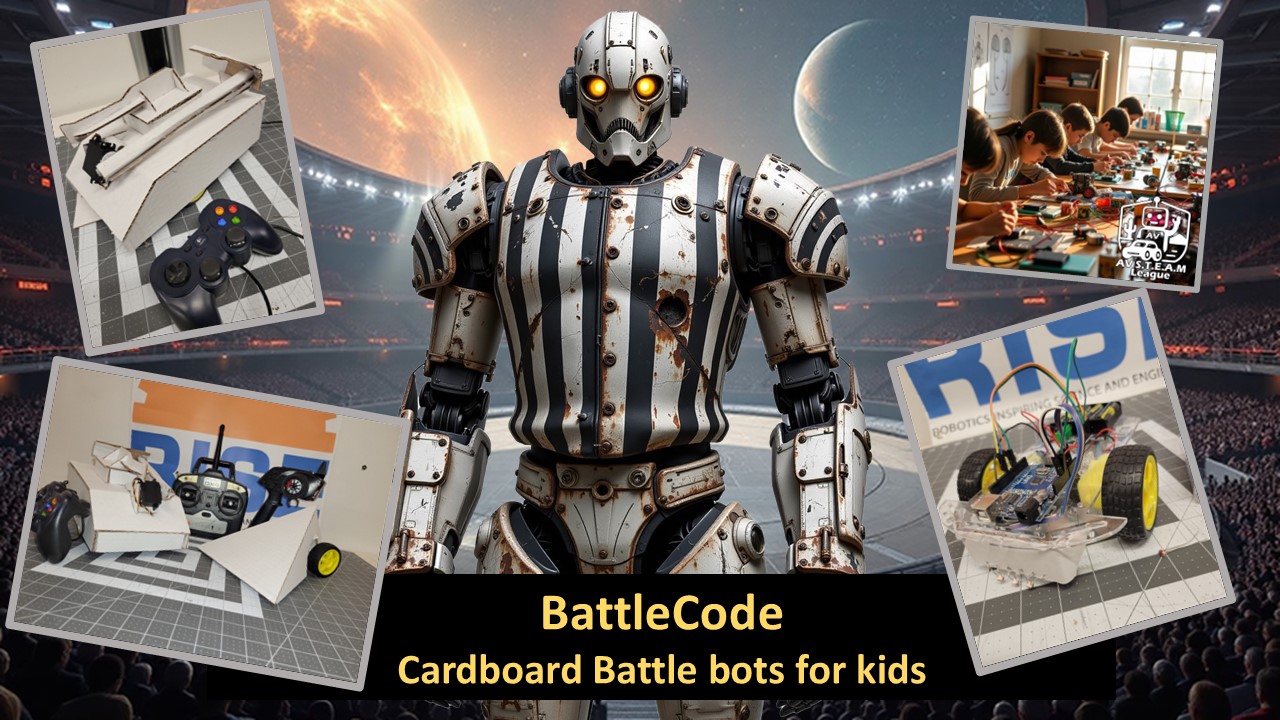
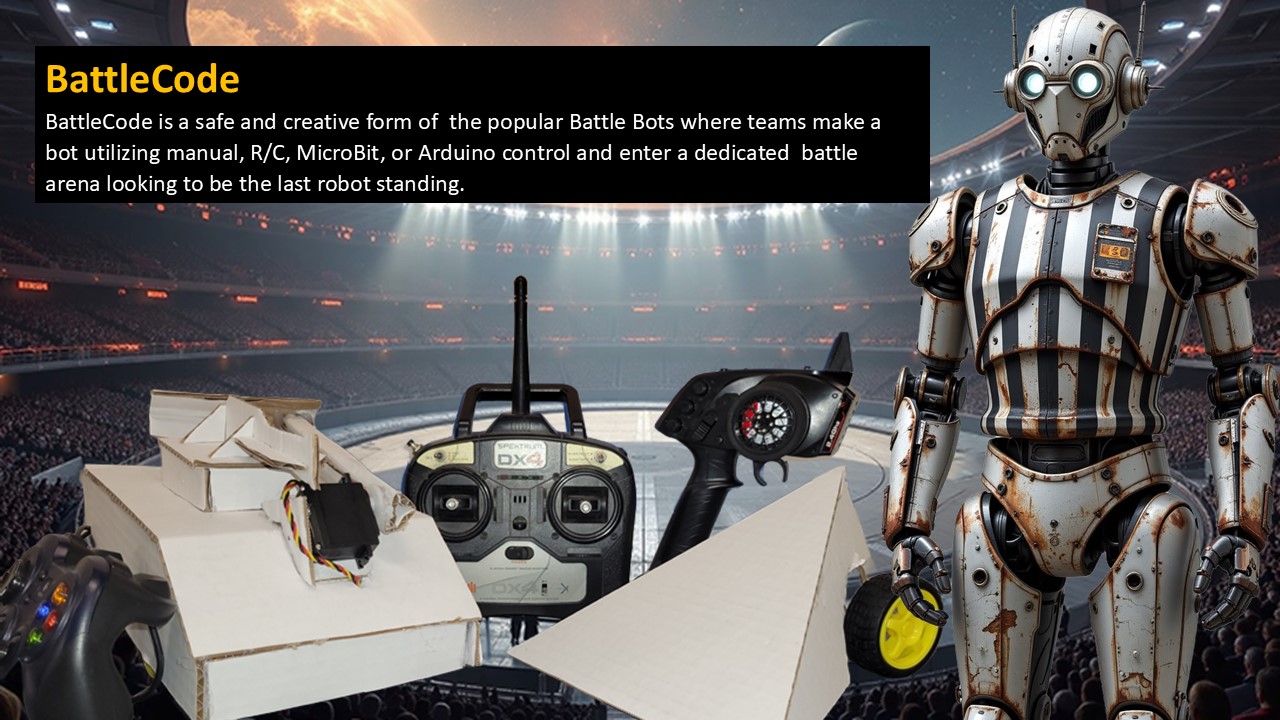
BattleCode is a creative, safe, and wildly engaging robotics challenge inspired by competitive battle bots, redesigned specifically for students. Teams design and build small scale combat robots using cardboard and foam based construction, simple electronics, and student friendly control systems. Robots enter a dedicated arena and compete head to head with the goal of being the last bot standing.
This challenge is not about destruction. It is about problem solving, design thinking, teamwork, control, and resilience. Students learn that engineering is not about building something once but about iterating, testing, failing, adjusting, and trying again.
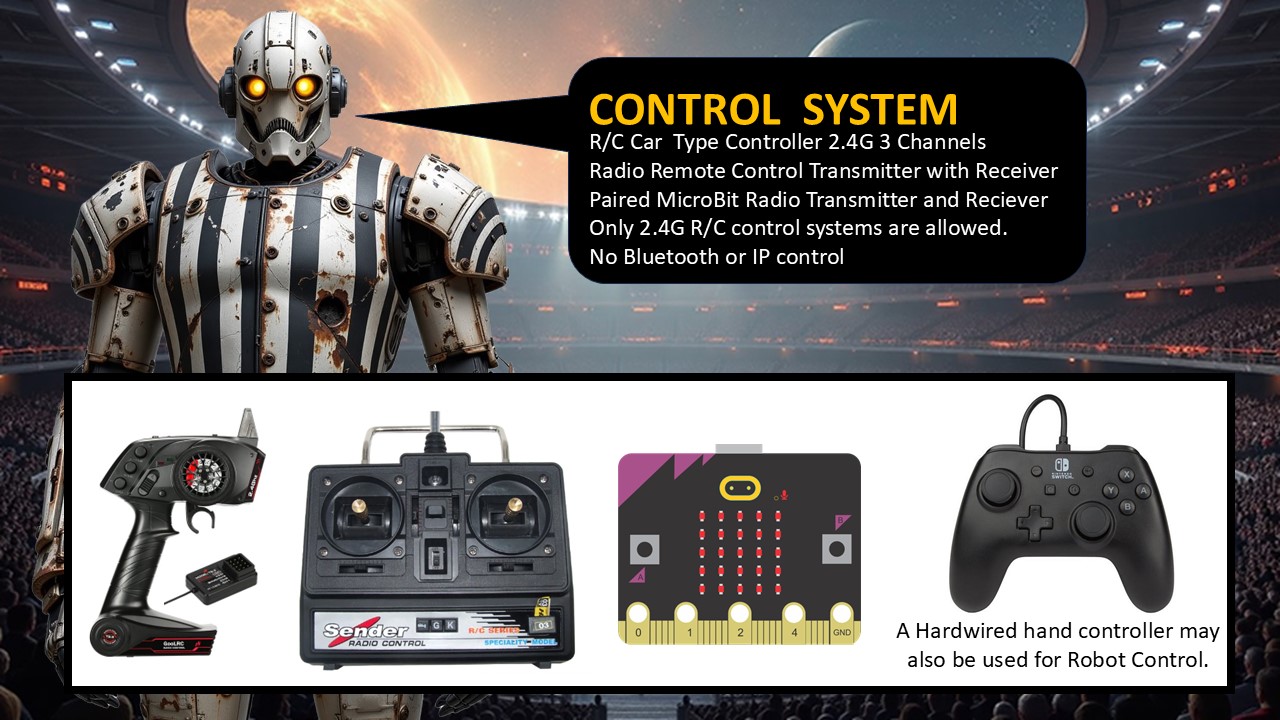
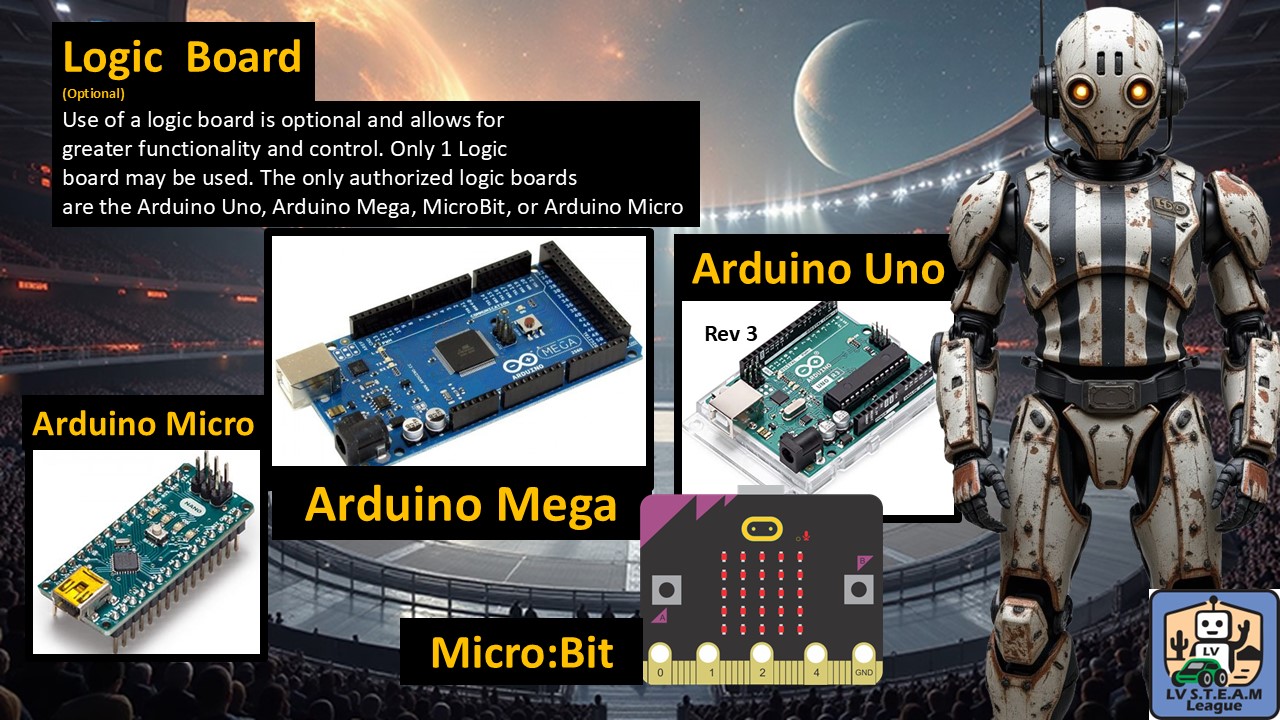
BattleCode welcomes a wide range of skill levels. Teams may use manual control, RC systems, MicroBit radio control, or Arduino based logic depending on their experience and comfort level.
Who Can Participate
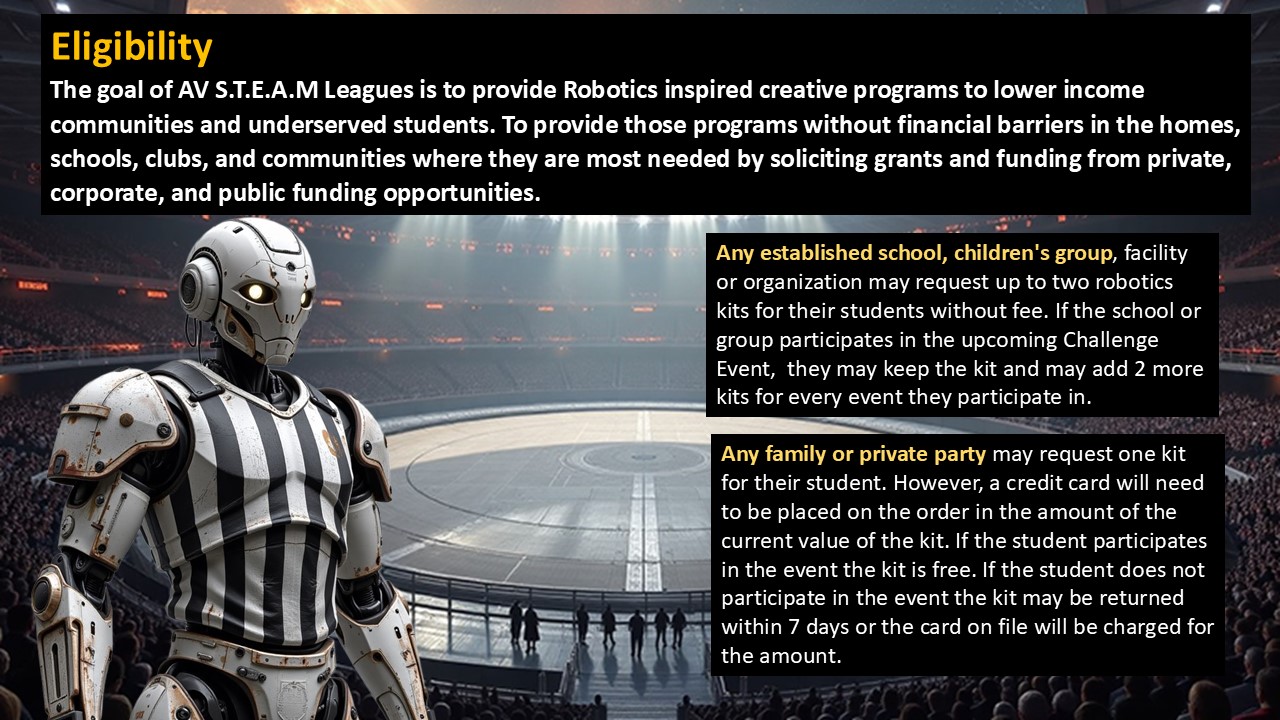
The AV STEAM League was built to remove financial and access barriers for students who might otherwise never experience robotics or engineering programs. Schools, clubs, and youth organizations serving underserved or lower income communities may request up to two BattleCode robotics kits at no cost. Groups that participate in official Challenge Events may keep their kits and earn additional kits through continued participation.
Families and private participants may also request a kit. In these cases, a refundable deposit equal to the kit value is required. If the student participates in the event, the kit becomes theirs. If not, the kit may be returned within seven days.
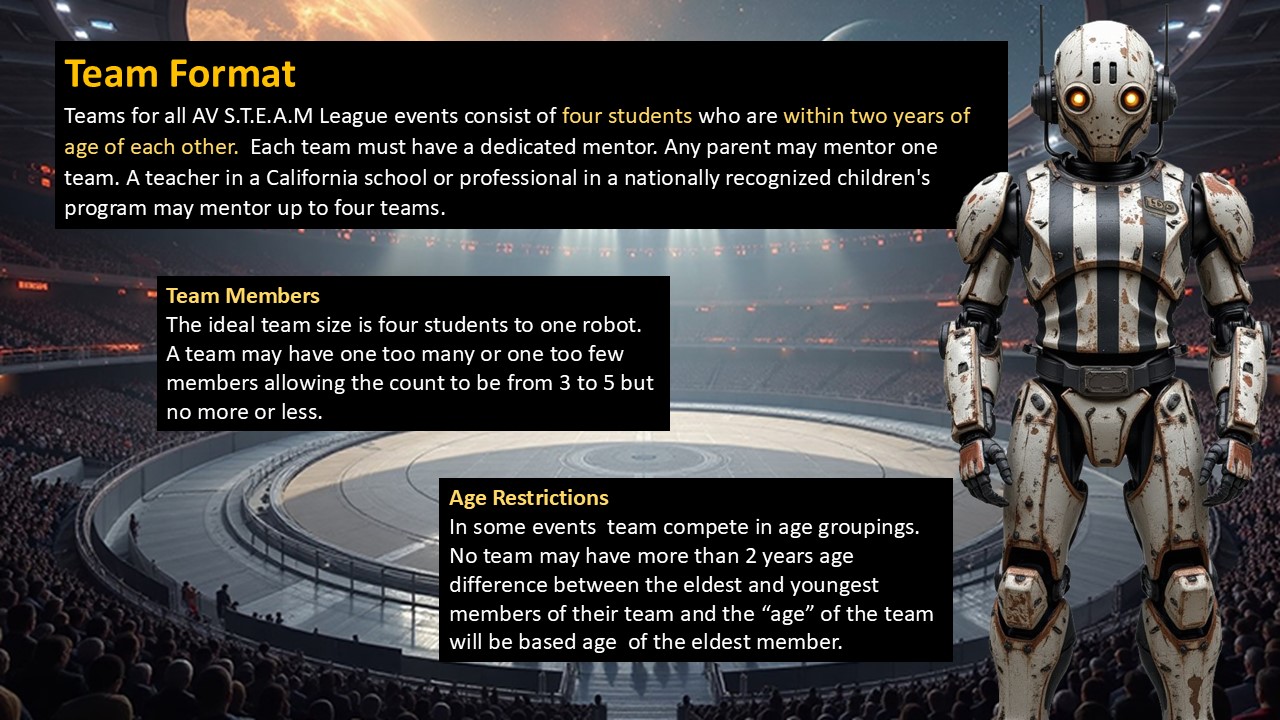
Teams consist of students close in age to ensure fair competition and healthy collaboration. Each team is mentored by a dedicated adult. Parents may mentor one team. Teachers or professionals affiliated with recognized youth programs may mentor multiple teams.
The Arena and the Battle
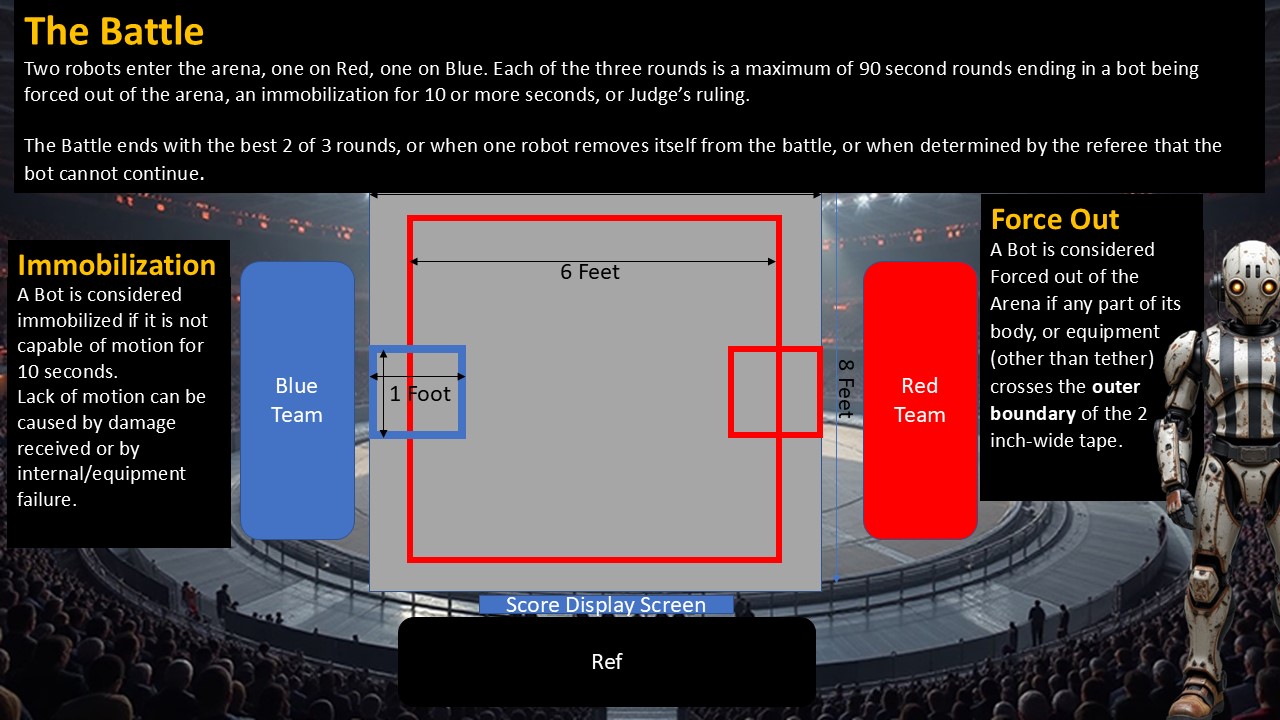
Two robots enter the arena, one assigned Red and one Blue. Matches are fought in a clearly marked arena with a taped boundary that defines the active battle space. Each battle consists of up to three rounds, with each round lasting no more than ninety seconds.
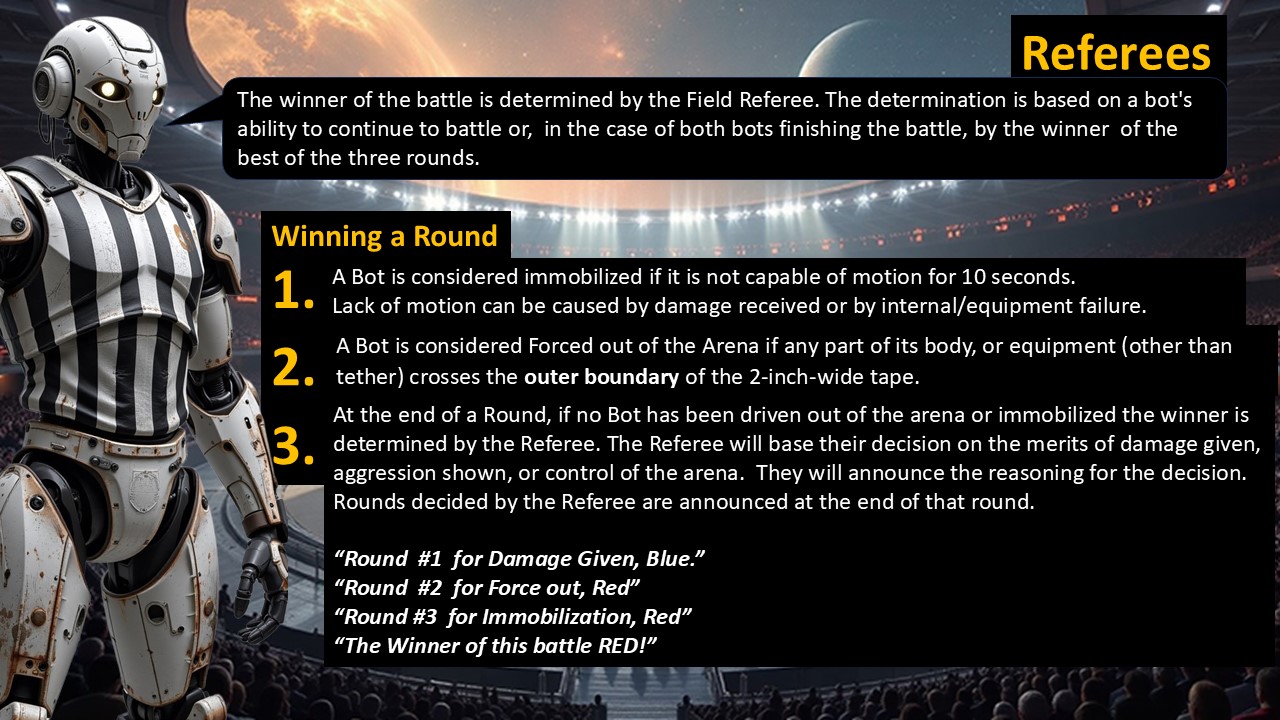
A round ends if one robot is forced out of the arena, becomes immobilized for ten seconds or more, or if the referee determines that a robot can no longer safely continue. If neither robot is disabled or removed from the arena by the end of the round, the referee will decide the winner based on control, aggression, and effective engagement. The referee announces the reasoning for each decision so students understand what mattered and why.
The match winner is determined by best two out of three rounds, or earlier if a robot withdraws or is declared unable to continue.
Safety, Inspection, and Fair Play
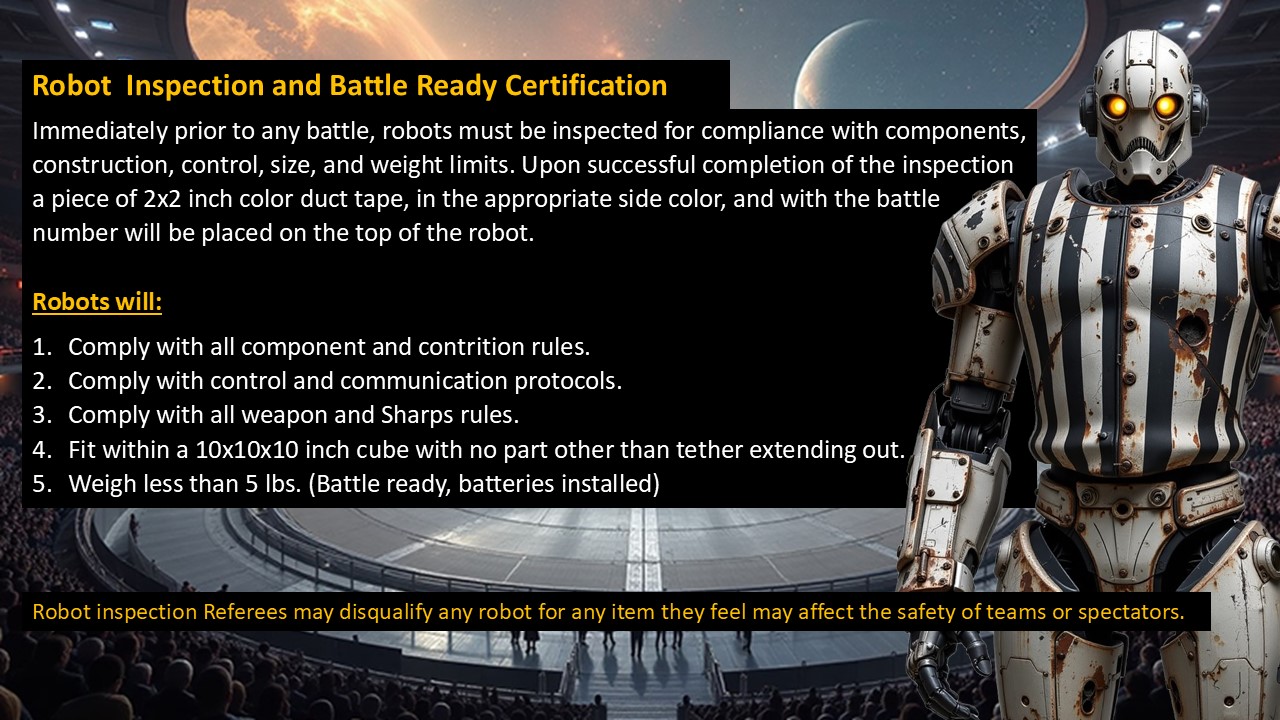
Every robot must pass a Battle Ready Inspection immediately before competing. This inspection ensures that robots meet size, weight, power, and component requirements and that nothing presents a safety risk to students, mentors, or spectators. Approved robots receive a visible battle certification marking before entering the arena.
Referees may disqualify any robot at any time if it poses a safety concern or violates the spirit of the challenge. Safety always comes first.
Design Constraints That Drive Creativity
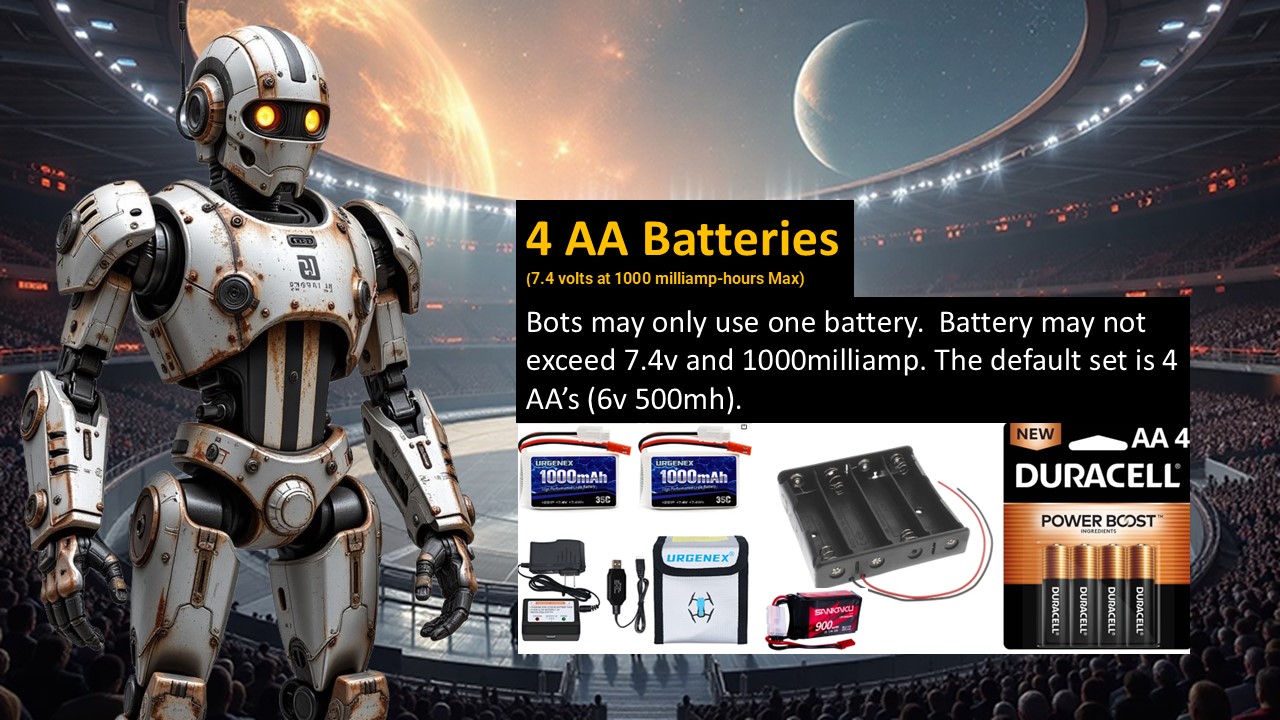
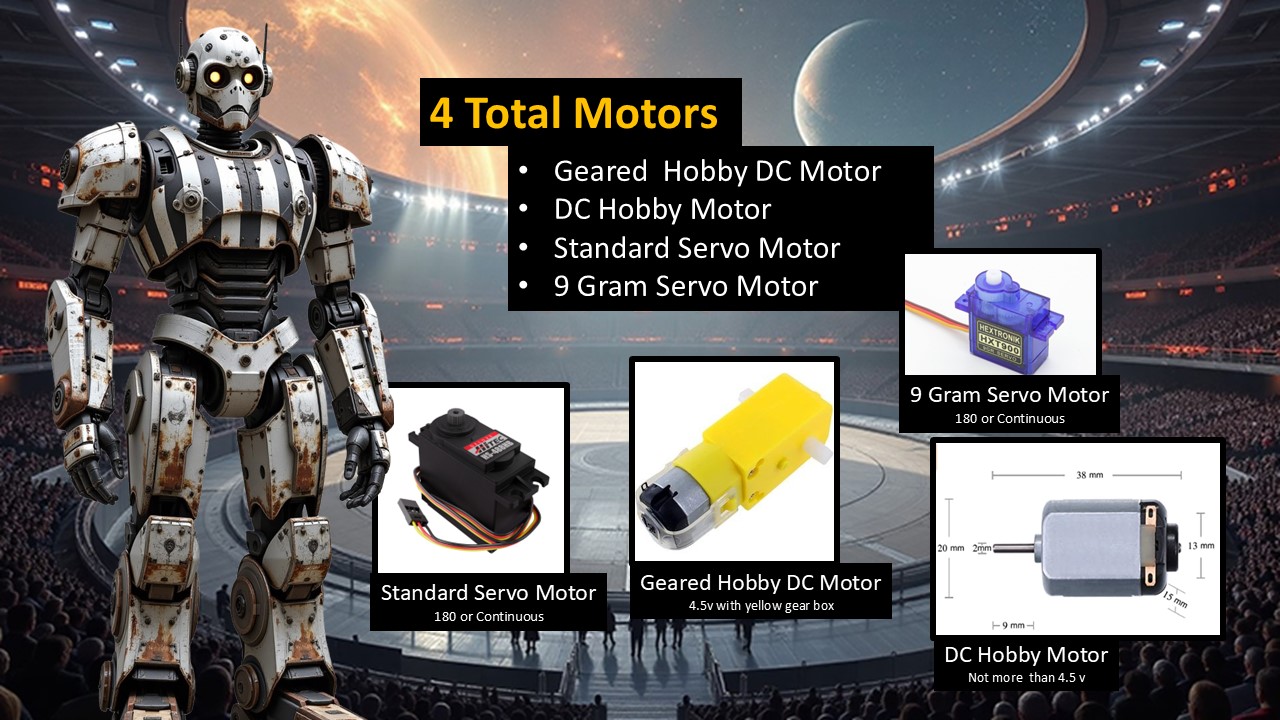
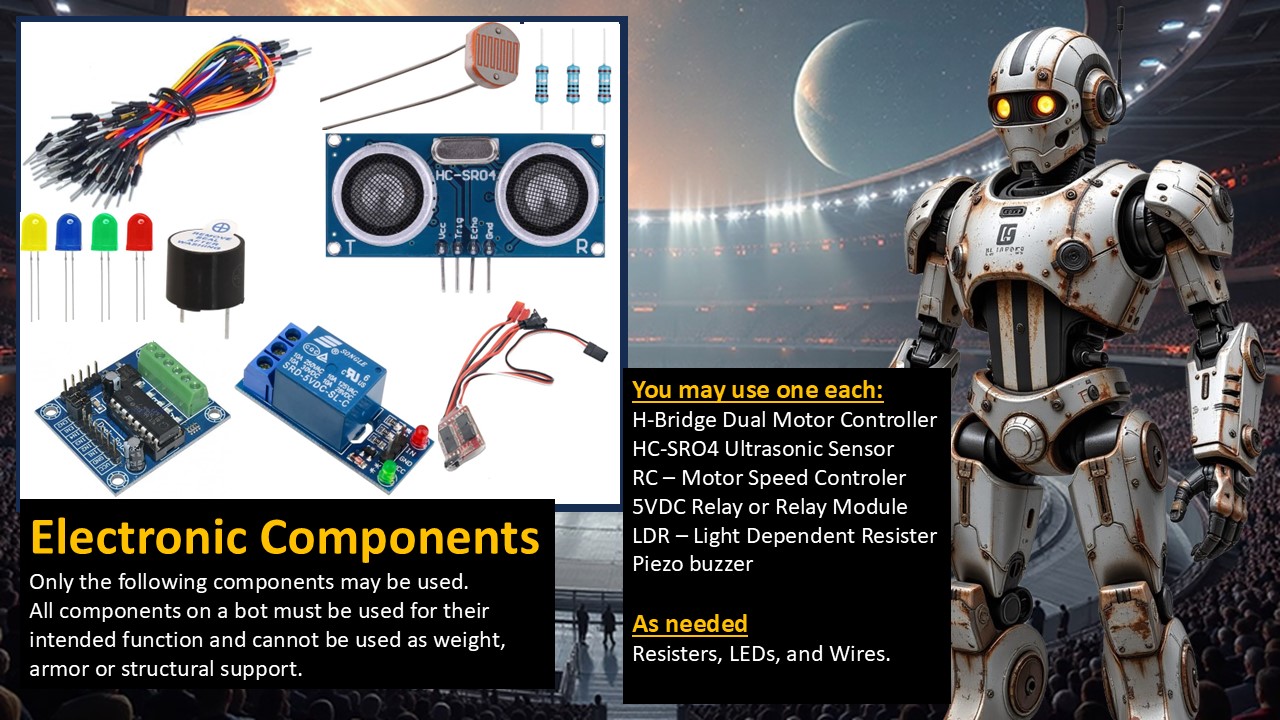
Robots must fit inside a ten inch cube and weigh under five pounds with batteries installed. Power is limited to a single battery not exceeding seven point four volts and one thousand milliamp hours. Motors, servos, and electronics are limited to approved hobby grade components to ensure safety and fairness.
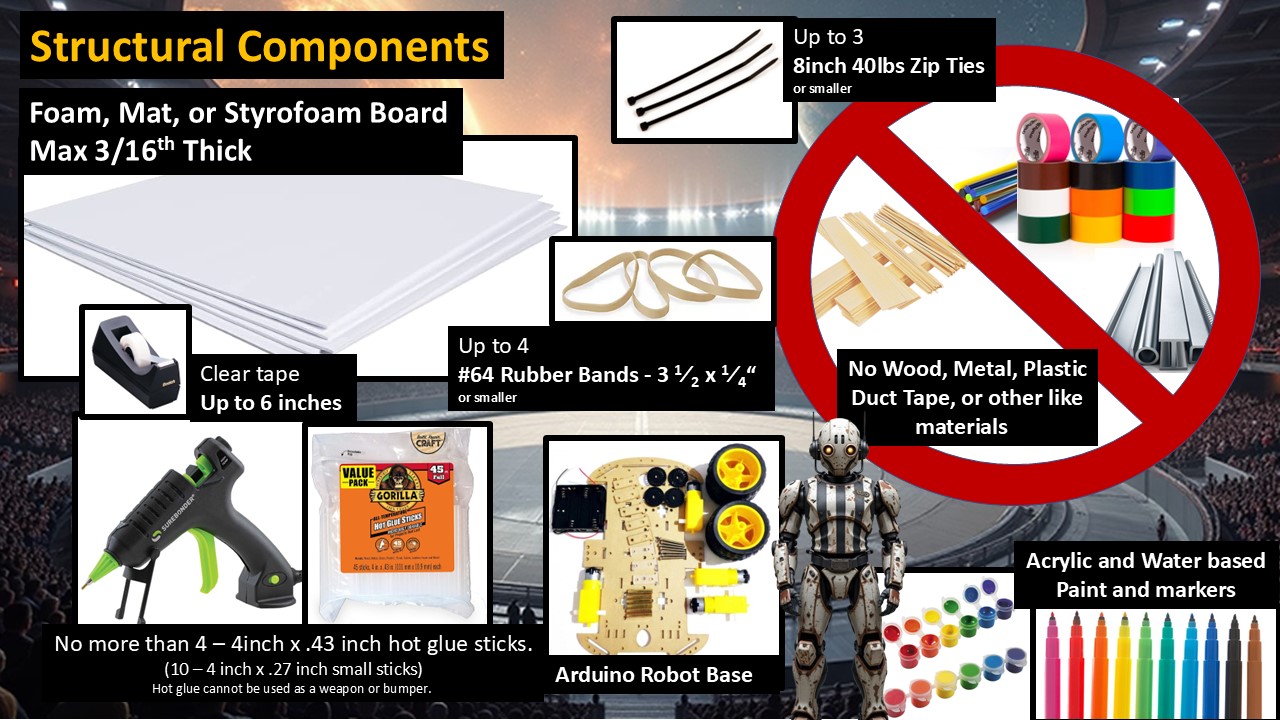
Structural materials are intentionally restricted to foam board, cardboard style materials, limited adhesives, and lightweight fasteners. No wood, metal, or rigid plastic structures are allowed. This keeps the focus on design, balance, and clever use of materials rather than brute force.
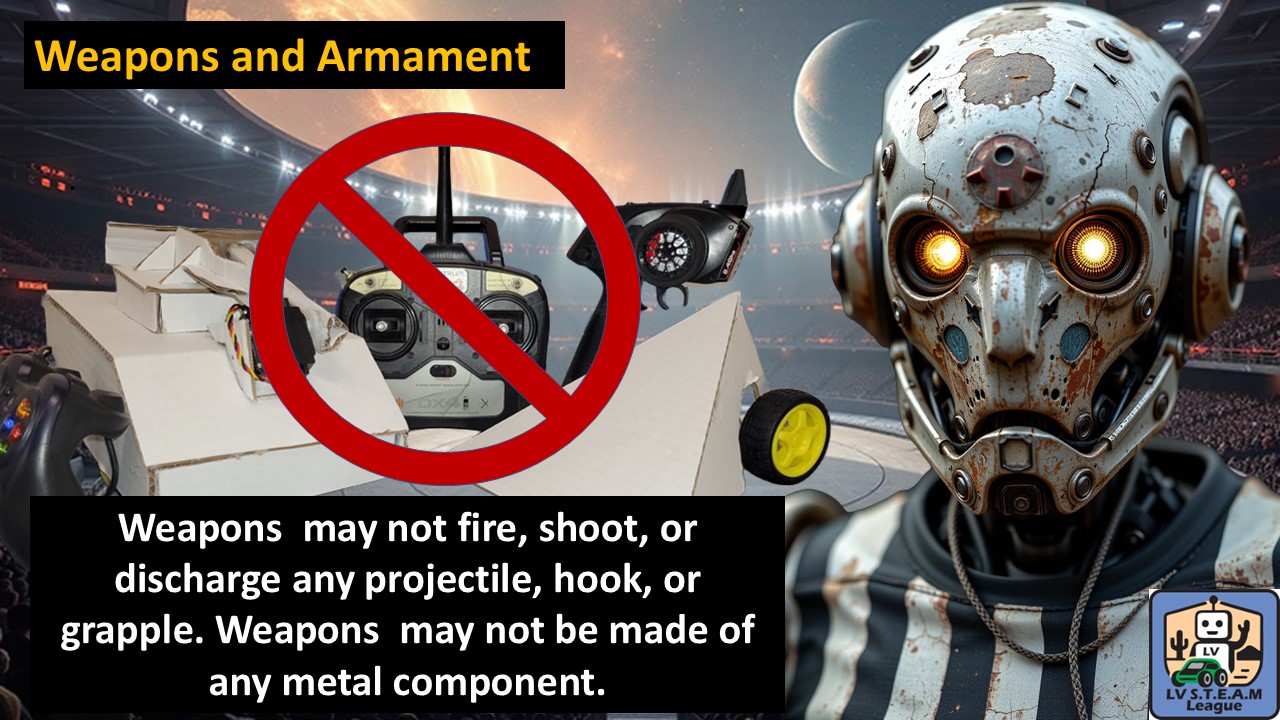
Weapons are allowed only in non projectile, non grappling forms and must be made entirely from non metal components. The goal is controlled interaction, not damage or harm.
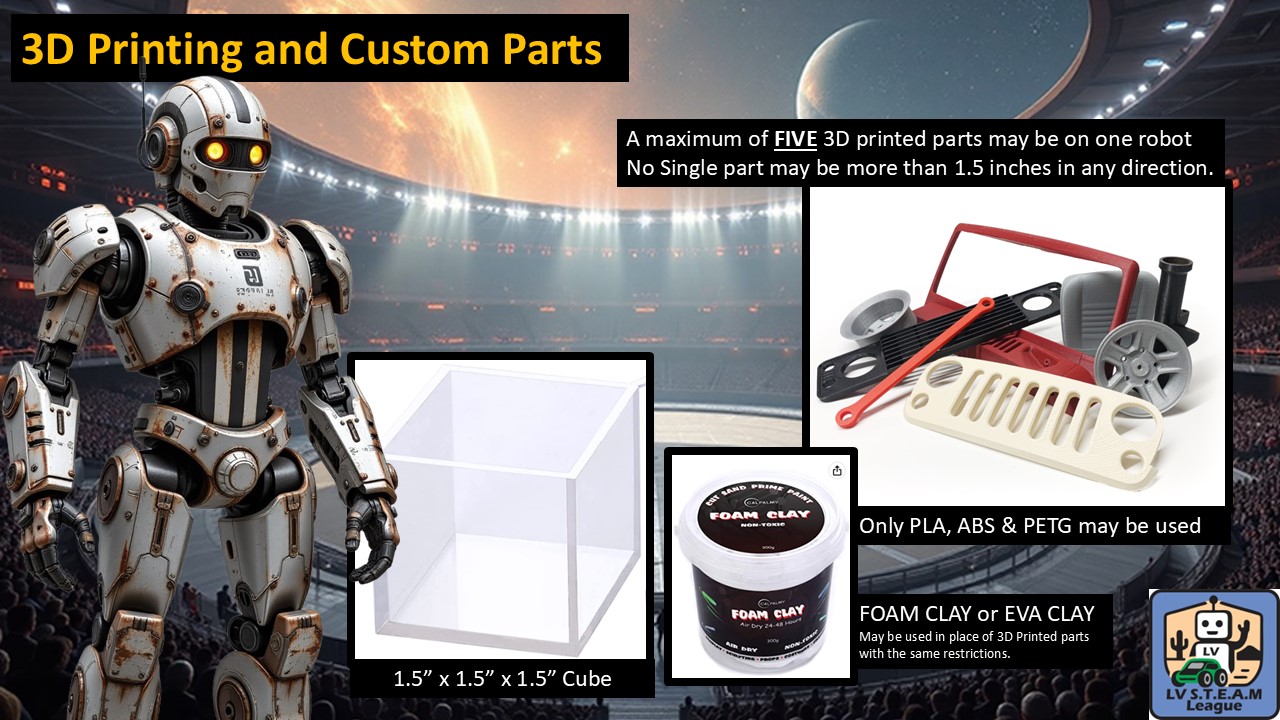
Limited 3D printed parts are permitted using student safe plastics, reinforcing modern fabrication skills while preventing over reliance on advanced tooling.
What Students Learn
BattleCode teaches far more than robotics. Students learn how to work as a team under pressure. They learn how to interpret rules and design within constraints. They learn that failure is not the end of a project but part of the process. They experience competition in a structured environment that emphasizes respect, communication, and growth.
Most importantly, students walk away understanding that engineering is something they can do. Not someday. Not later. Right now.