
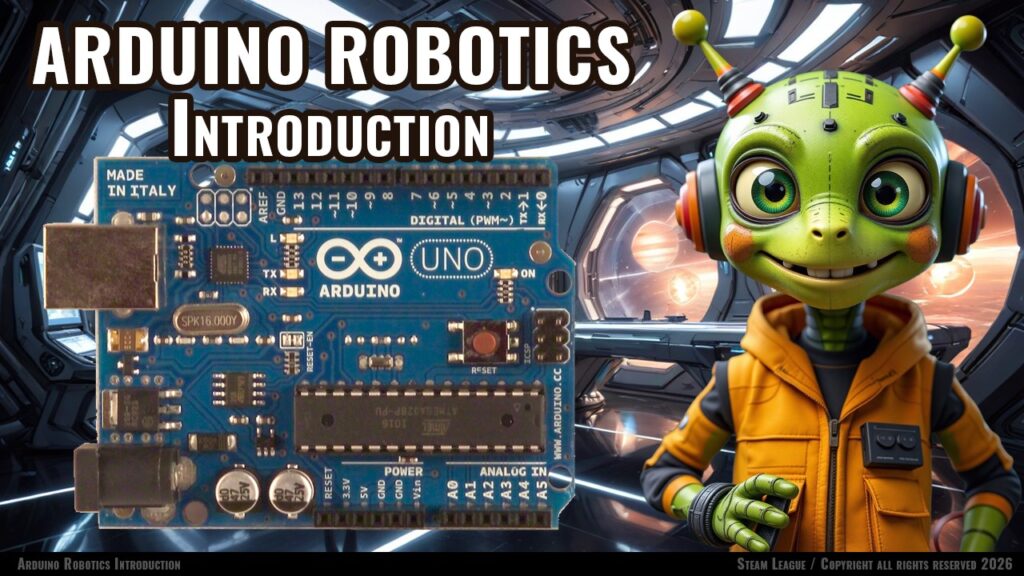
Overview
This first lesson opens the door to what it means to be a maker in the LV STEAM League. Students discover that robots are no longer science fiction and that creative technology lives all around them. They learn that every robot and every invention began as an idea in someone’s mind, and that someone was a person just like them. The heart of this lesson is helping students feel that they belong in this world of building, imagining, and experimenting. We introduce the core ideas of Maker Science, the value of small steps, and the idea that mistakes are simply part of the process.
Student Learning Goals
By the end of this lesson students will be able to:
• Understand that robots are part of everyday life
• Recognize that makers are ordinary people who choose to create
• Explain the core tenets of Maker Science in their own words
• Reflect on how creativity grows one small step at a time
• Feel confident that they can learn, explore, and build in this program
Materials Needed
Notebooks or reflection journals
Pencils or pens
Projector and the lesson slide
Whiteboard or chart paper
Markers
Any small household objects for discussion examples
Teacher Preparation Notes
Take a moment before class to reread the slide and think about how you want to introduce the idea that robots are everywhere. You do not need to be an expert in robotics. The goal is to make students feel excited and welcomed. If you have time, gather a few simple objects from around the room to use as examples during discussion such as a calculator, remote control, or small motorized toy. These help students see that technology doesn’t have to feel distant or complicated.
Keep the pace gentle. This lesson is meant to set the tone for the entire program. Your calm energy will help students feel safe and ready to explore.
Safety Notes
We always respect our tools
We work slowly and carefully
We make sure the room feels safe for everyone
We listen to each other and treat every idea kindly
Warm Up Activity
Ask students a simple question that opens their imagination.
Try something like
What is the smallest or funniest robot you have ever seen
Let a few students share. Encourage them to think of robots in places they may not expect such as automatic doors, tiny motors inside toys, or vacuum robots. Keep this warm up short and playful.
Lesson Flow
Step One: Introducing the World of Robots
Show the slide with the phrases
Robots no longer science fiction
Robots in everyday life
Explain that robots are not just in movies. They help us work, explore, build, clean, and even play. Remind students that every robot ever made started as someone’s idea.
Teacher note
If students seem unsure, point to objects in the room or bring up common examples like traffic light systems or phone assistants. The goal is simply to spark curiosity.
Step Two: Makers Are People Like You
Point out the line
They were all invented by someone like you
Talk about how inventors are regular people who choose to imagine something new. Share that they didn’t start out knowing everything. They started with curiosity.
Hands on moment
Ask students to look around the room and choose one object they think someone had to design or invent. Give them a minute to think and share what they noticed.
Step Three: Core Tenets of Maker Science
Walk students through the four ideas from the slide
You build a pyramid one brick at a time
Being a maker is messy
Failure is not an option
No one person is smart enough
Explain each phrase gently and with warmth
One brick at a time means we learn step by step
Being messy means we get comfortable with trying things out
Failure is information that helps us move forward
No one is smart enough alone reminds us that teamwork makes us stronger
Give students a tiny challenge
Ask them to draw or write a symbol for each tenet in their notebook. Something simple and personal. This helps them remember.
Step Four: Success as a Journey
The slide shows a line about success.
Help students understand that success is simply the result of many small attempts. Makers do not wait to be perfect. They try, test, learn, and grow.
Group reflection
What did you learn about being a maker
What surprised you today
How did this lesson change how you think about robots
Step Five: Closing Thoughts
Invite students to share one idea from today that made them feel excited or curious. This reinforces community and belonging.
Teacher Notes for Each Slide
Slide: Welcome to Phase 1
This slide sets the entire tone for the program. Keep your voice warm. Encourage students to feel that this is a safe and creative space where they can try new things.
Robots no longer science fiction
Offer real examples students know. Emphasize that technology is part of daily life.
Robots in everyday life
Let students name examples. Validate all contributions.
They were invented by someone like you
Remind students that every inventor starts as a beginner. This is empowering.
Core tenets of Maker Science
Move slowly through each idea. Students love when teachers relate these to real life.
Success
Let students know that success looks different for everyone and grows over time.
Independent or Group Activity
Have students work in pairs to list three places in the world where they think robots might appear in the next twenty years. Encourage imaginative thinking. They can draw or write them. The goal is to help students see themselves as future creators.
Vocabulary and Concepts
Robot
A machine that can follow instructions or respond to the world around it.
Maker
A person who creates things using imagination, tools, and curiosity.
Failure
Information that helps guide the next attempt.
Success
A desired outcome that grows from many small steps.
Wrap Up
Ask
What did you discover about makers today
What would you tell someone who was nervous about joining this program
Exit Ticket
Write one sentence
What is one way you see robots in everyday life
Write one more
Which Maker Science idea feels most true to you and why
Quiz
- Name one place where robots appear in everyday life.
- What does it mean when we say you build a pyramid one brick at a time
- Why is being messy an important part of making
- True or False
Inventors always know exactly what to do on the first try - In your own words, what does success mean in this program
Teacher Reflection
What moments felt exciting or meaningful
Where did students seem unsure
How did the group respond to the Maker Science ideas
What would you adjust next time