
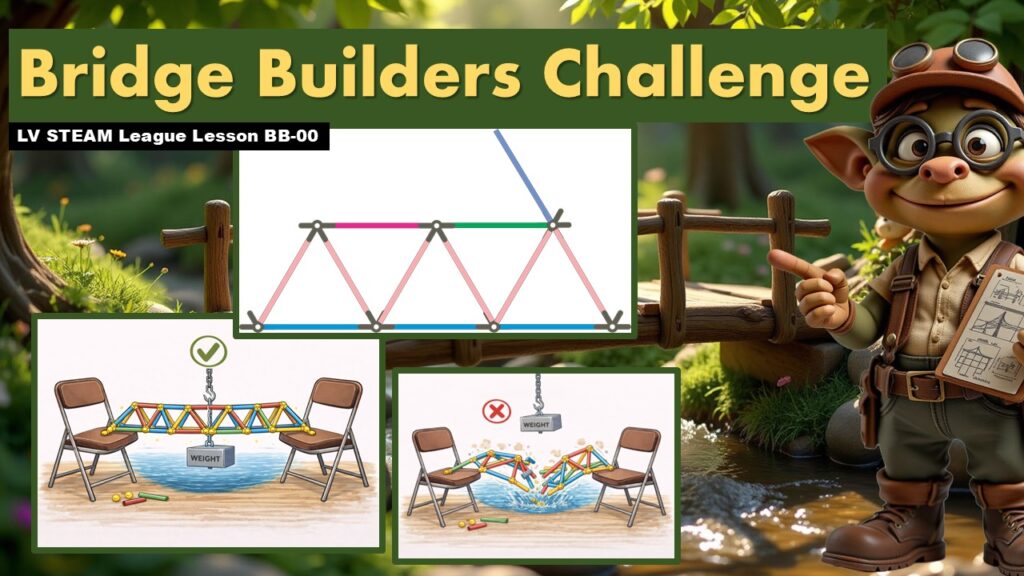
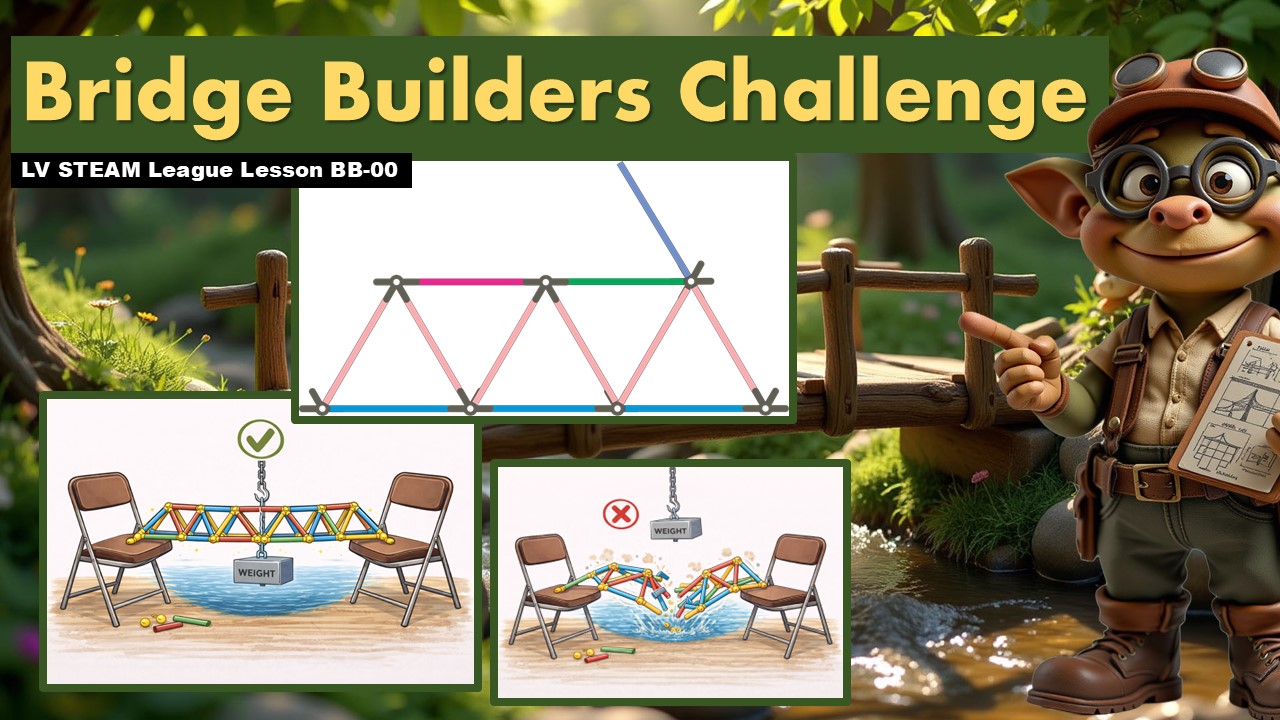

This challenge gives students a chance to apply what they learned about bridges and structural shapes by designing, building, and testing a real working bridge under controlled constraints. The focus is on engineering decision making, teamwork, and understanding how shape controls strength.
Students are not graded on appearance. They are evaluated on performance, rule compliance, and structural behavior.
Recommended Age Range
Upper elementary through middle school
Challenge scales naturally by adjusting material limits
Time Required
Intro and rules review: 10 minutes
Build time: 60 minutes
Testing and results: 20 to 30 minutes
Total time: approximately 90 minutes
Materials Per Team
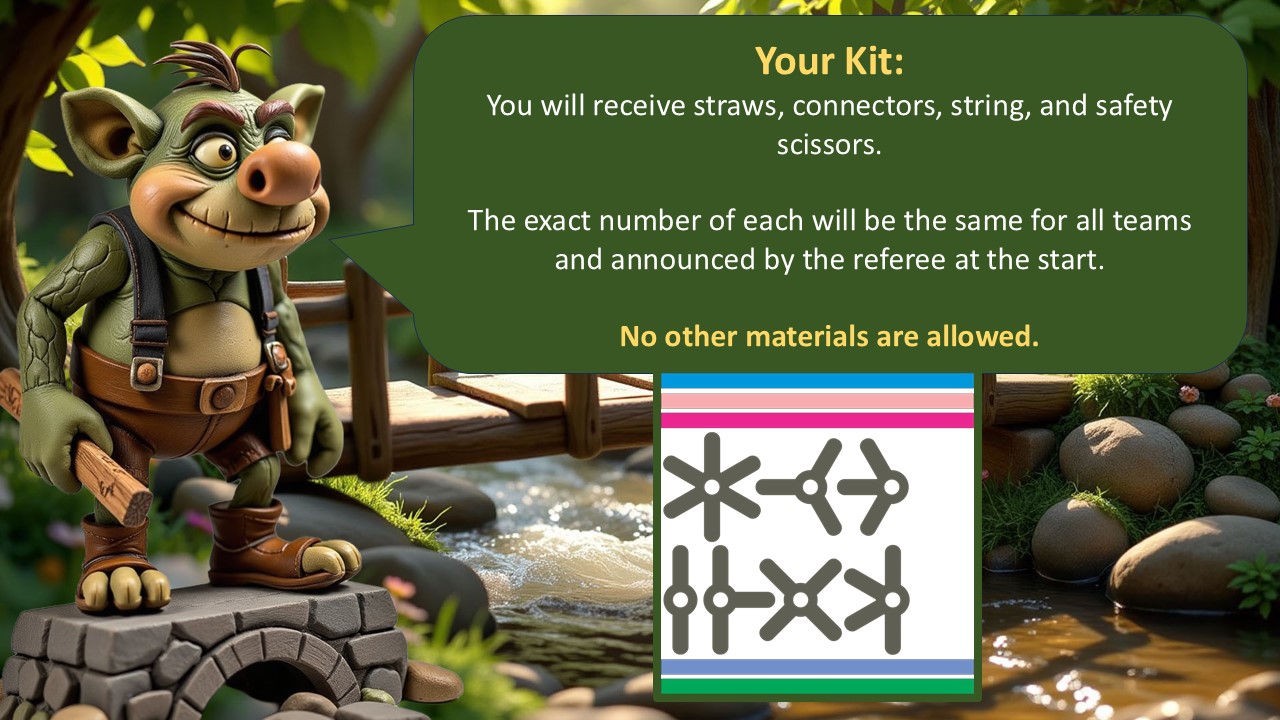
Each team receives a kit prepared by the referees.
The kit includes a specified number of drinking straws, connectors, string, and one pair of safety scissors.
The exact quantities are announced at the start of the challenge and are the same for all teams.
No additional materials are allowed.
Room Setup Before Students Arrive
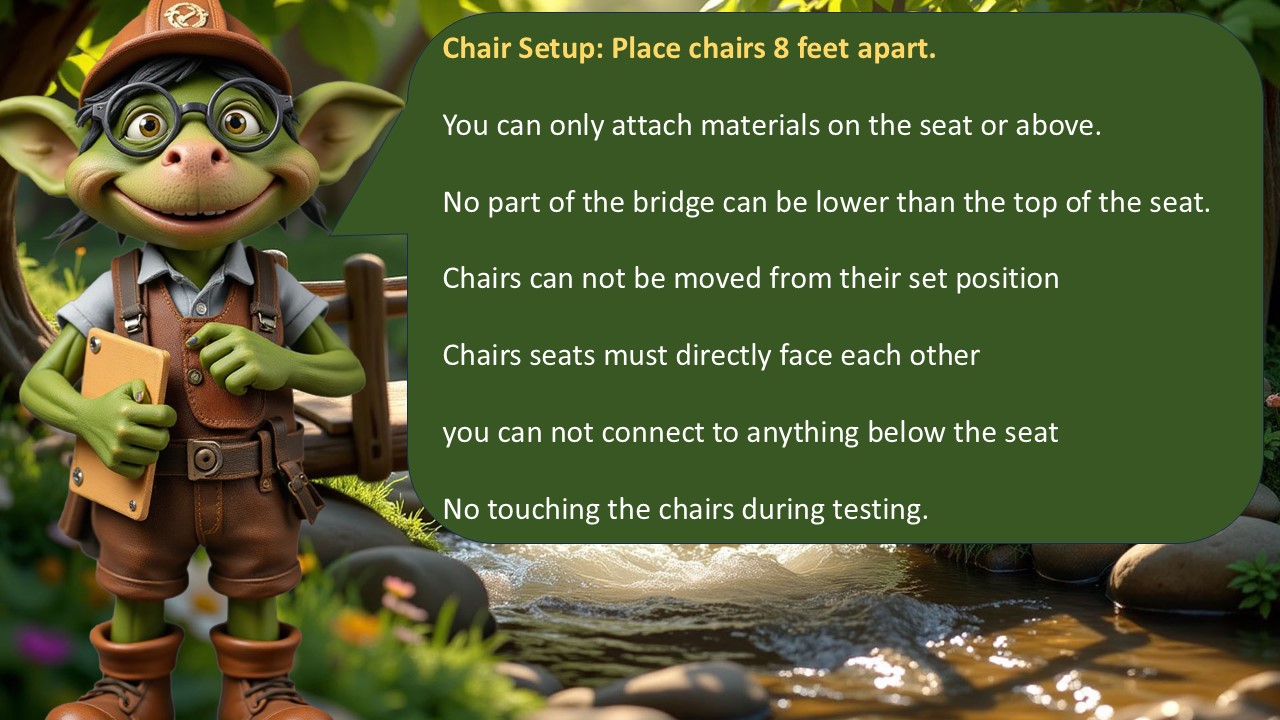
Place two standard folding chairs at each build station.
Chairs must be positioned exactly eight feet apart.
Chairs must directly face each other.
Mark chair locations on the floor so movement is visible.
Prepare testing weights and measuring tools for deflection.
Team Structure
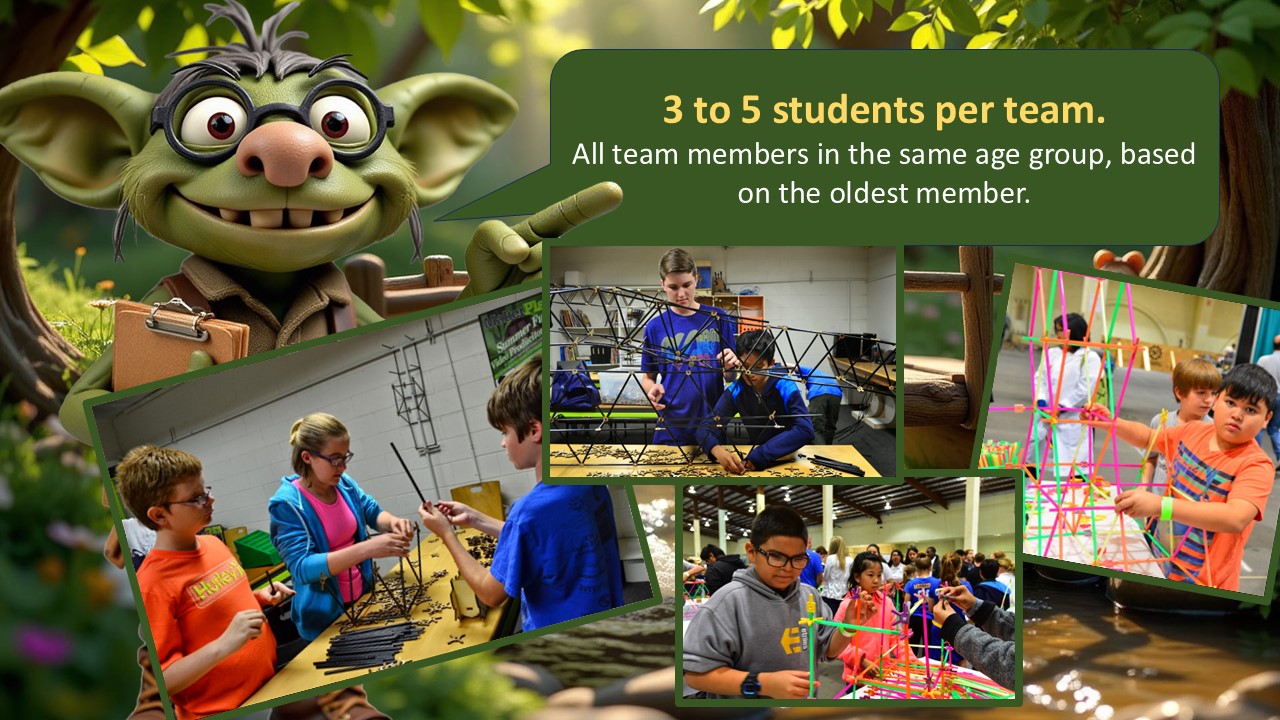
Teams consist of three to five students.
All students must be in the same age group.
Age group classification is based on the oldest student on the team.
Encourage teams to discuss ideas before building begins.
Introduction Script for Facilitator
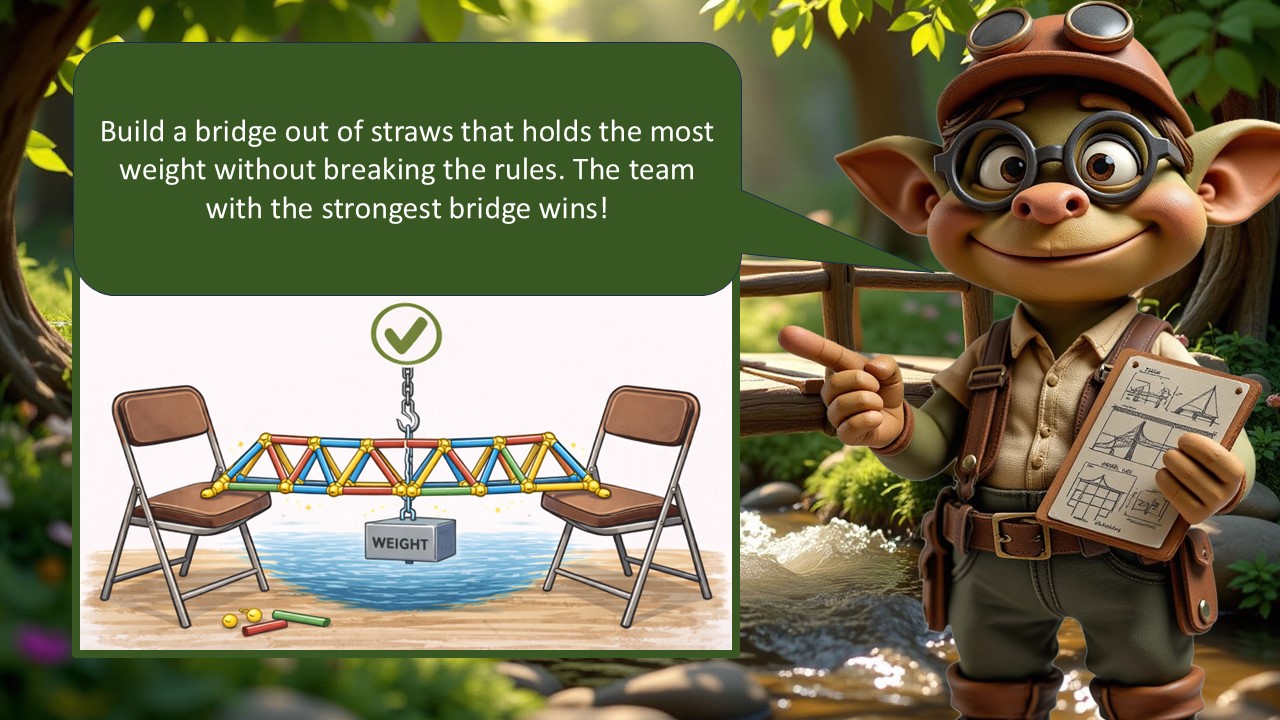
Today you are engineers. Your goal is to build a bridge using only the materials in your kit that can hold the most weight without breaking the rules.
This is not about speed. It is not about looks.
It is about design choices and how well your structure controls load.
You will have one hour to build.
Build Phase Rules to Emphasize
Students may cut straws and string to any length.
String may be tied in any configuration.
Straws and string may be attached only to the flat seat of the chair or above.
No part of the bridge may hang lower than the top of the chair seat at any time.
Chairs may not be moved, lifted, or held.
No person may touch the chairs during testing.
Build Phase
Start a visible one hour timer.
Circulate and observe, but do not give design advice.
Answer rule clarification questions only.
If a team violates a rule during construction, instruct them to correct it before continuing.
End of Build Phase
At one hour, all students must stop working immediately.
Tools are put down.
No further adjustments are allowed.
This moment is important. Enforce it consistently.
Testing Phase Procedure
Referees test one bridge at a time.
Weight is placed on the bridge, not on the chairs.
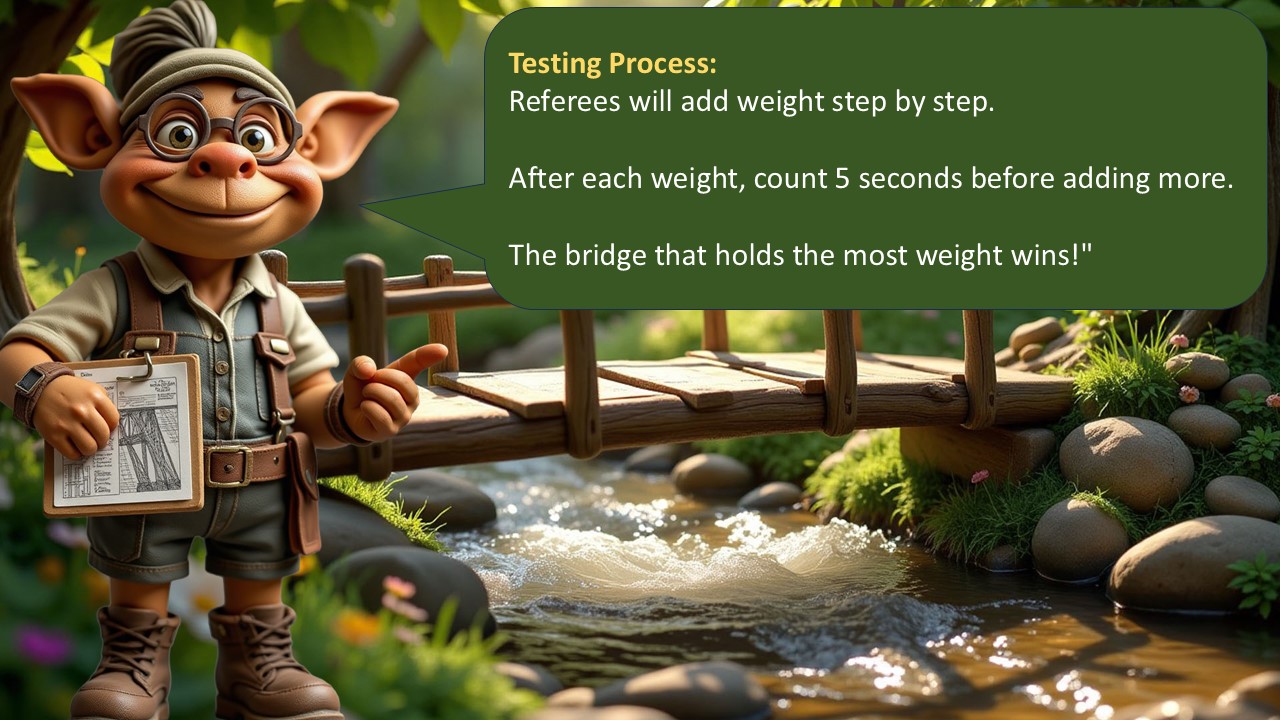
After each weight is added, the referee counts to five seconds before adding more.
Testing continues until a failure condition occurs.
Failure Conditions
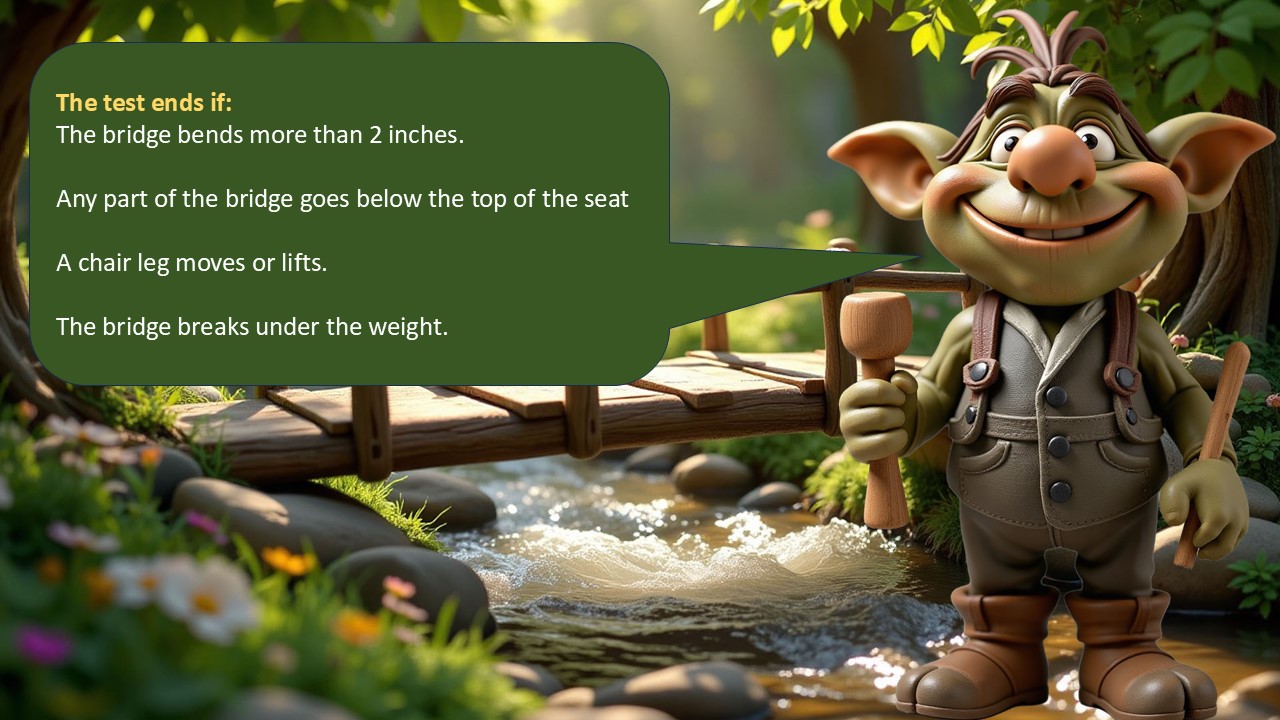
Testing for a team ends immediately if any of the following occur.
The bridge bends more than two inches downward.
Any part of the bridge drops below the top of the chair seat.
Any chair leg moves or lifts off the ground.
The bridge breaks or the weight passes through it.
Record the maximum weight held before failure.
Winning Condition
The winning team is the one whose bridge holds the greatest amount of weight without violating any rules.
In the event of a tie, facilitators may recognize both teams or use build quality discussion as a tiebreaker.
Safety and Fair Play Expectations
No interfering with other teams.
Only safety scissors may be used.
Students must remain clear during testing.
Respect the outcome and other teams’ work.
Closing Reflection Prompt
After testing, ask students one or more of the following.
What design choice helped your bridge the most
Where did your bridge begin to fail
If you could rebuild, what would you change
How did triangles affect your structure
This reflection is where learning locks in.
Facilitator Note
This challenge works because the rules reinforce the lessons that came before it. Resist the urge to simplify or relax constraints. The constraints are what turn building into engineering.