
Phase 0 is our gentle introduction to the world of robotics, creativity, and hands on thinking. These lessons are designed to work at any time during the year and can be taught by any instructor or substitute with no pressure and no need for specialized knowledge. Each lesson stands on its own. There is no required order and no previous experience needed. A class can enjoy a Phase 0 lesson on a planned day, a surprise schedule change, a short session, or a day when a substitute steps in.
Lesson 00-01: Let’s Talk About Types of Robots
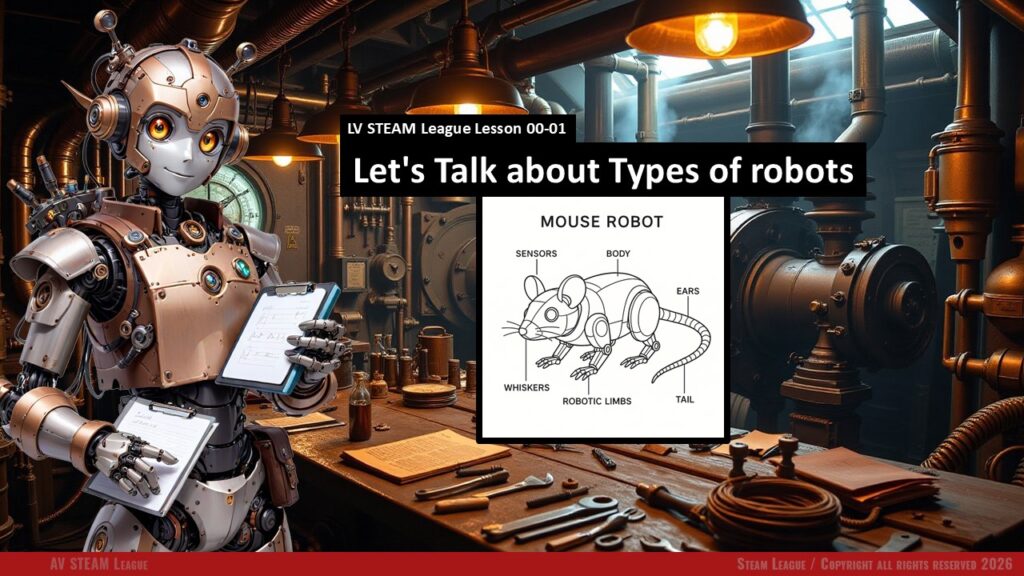
This lesson invites students into the wide world of robots by showing them just how many shapes and purposes robots can have. Students discover that robots are not just machines with wheels. They can fly, swim, crawl, explore, rescue, comfort, and even learn alongside us. By the end of this lesson students begin to see robots as helpers, tools, teammates, and creative inventions that solve real problems in the world. This lesson helps them see possibility everywhere and opens the door for future building and coding with confidence.
Lesson 00-02: The History of Robots in Movies
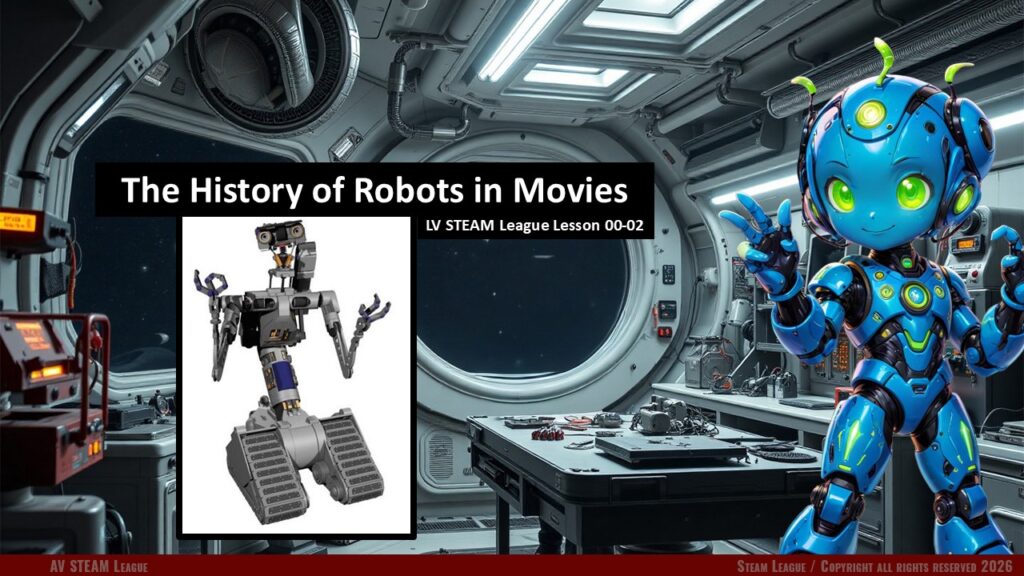
This lesson gives students a fun doorway into robotics by exploring how robots have appeared in movies over the last seventy years. Students discover how filmmakers imagine robots, what those designs say about human hopes and fears, and how movie robots sometimes inspire real engineering. They learn that creative storytelling and technology often grow together. This lesson helps students connect robots to culture, imagination, and the future they might help build.
Lesson 00-03: What Is Biomimicry
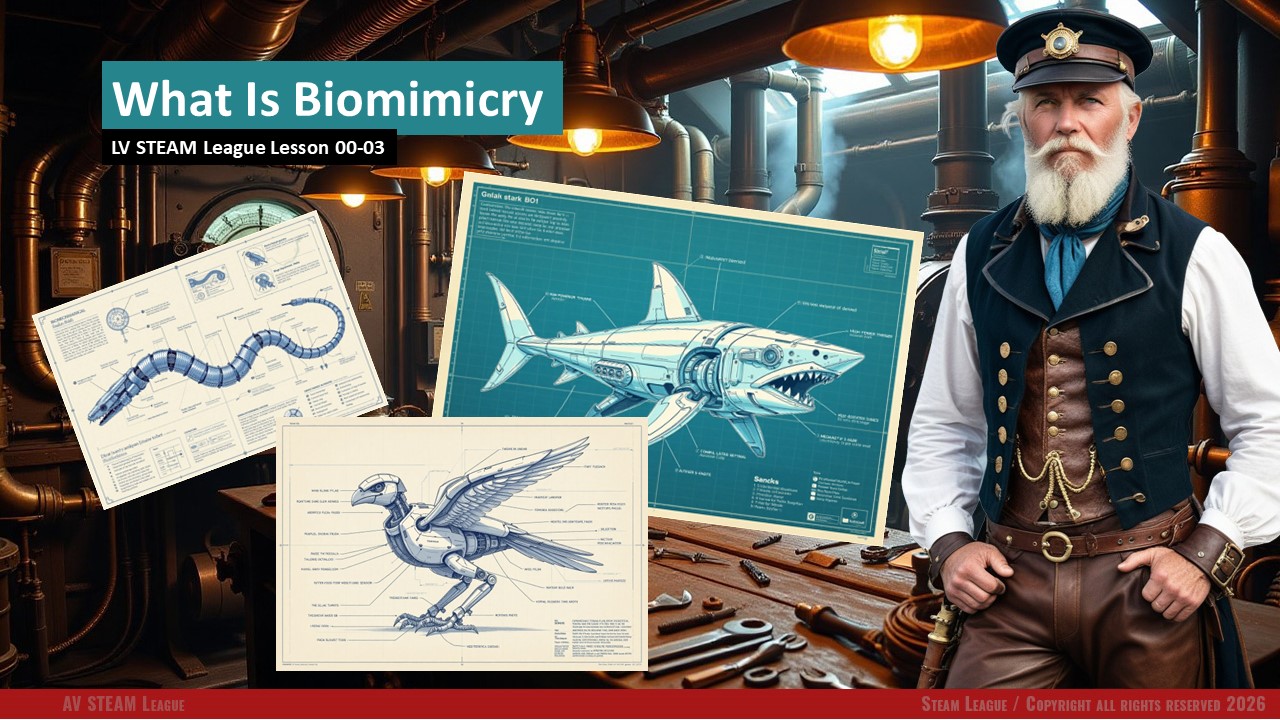
This lesson helps students see the natural world as a giant classroom full of ideas. Instead of forcing robots to move in only human invented ways, we invite students to look at how animals, plants, and ecosystems have already solved many design challenges. Students discover that nature has been refining movement for millions of years, and engineers can learn from that wisdom. This lesson builds curiosity, wonder, and a strong foundation for designing bioinspired robots in future sessions.
Lesson 00-04: How Robots SEA the World
This lesson helps students explore the very beginning of how robots understand the world. Before a robot can decide what to do or take action, it must first sense what is around it. Students learn that robots do not see, hear, or feel like humans do. Instead, they rely on thousands of different sensors that collect information. This lesson builds wonder, lowers fear, and invites students to imagine robotics as something creative and alive. Students finish class by designing their own robot with an extraordinary super-sense.