
The Hydro-Lift Program is a hands-on engineering journey where students learn how real machines work by building them from the ground up. Over the course of several weeks, teams explore the six simple machines, experiment with levers and pulleys, discover the power of hydraulic pistons, and combine these ideas into a working lift system of their own design. Instead of following instructions or copying past solutions, students learn through testing, failing, adjusting, and trying again. Every team receives the same kit of parts and uses only what is provided, creating a fair and creative challenge that encourages problem-solving, teamwork, and curiosity. At the final event, students have three hours to build their lifting device on-site, then compete to see how high they can raise the official weight and hold it for thirty seconds. The Hydro-Lift Program celebrates discovery, perseverance, and the joy of engineering something real with your own hands.

Hydro-Lift Challenge: Lesson 01 – Introduction
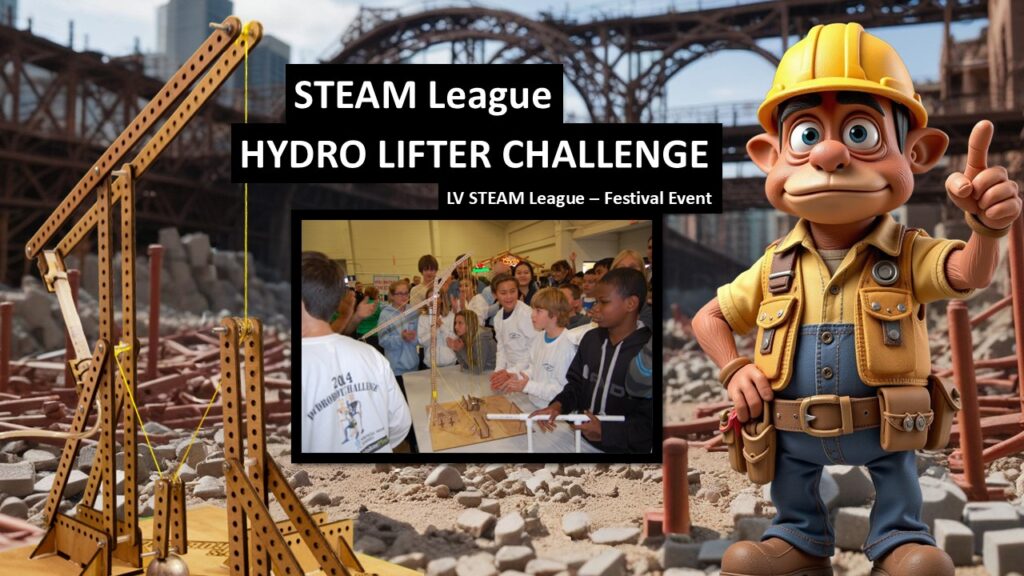
This lesson introduces students to the Hydro-Lift Challenge. Students learn what the challenge is, how the event works, what they will receive, and what the core expectations are. The goal is to build excitement, reduce anxiety, and set a clear understanding of the path ahead.
Hydro-Lift Challenge: Lesson 02 – Work & Simple Machines
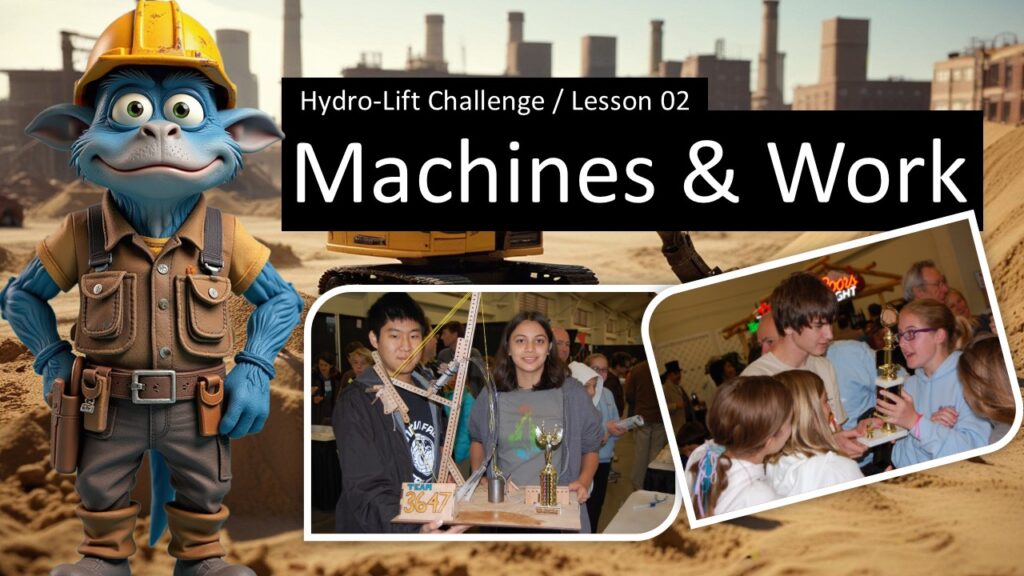
This lesson introduces students to the ideas of “work,” force, and how simple machines make work easier. Students begin recognizing how these ideas connect to the Hydro-Lift Challenge and the kinds of machines they will eventually build.
Hydro-Lift Challenge: Lesson 03 – Levers
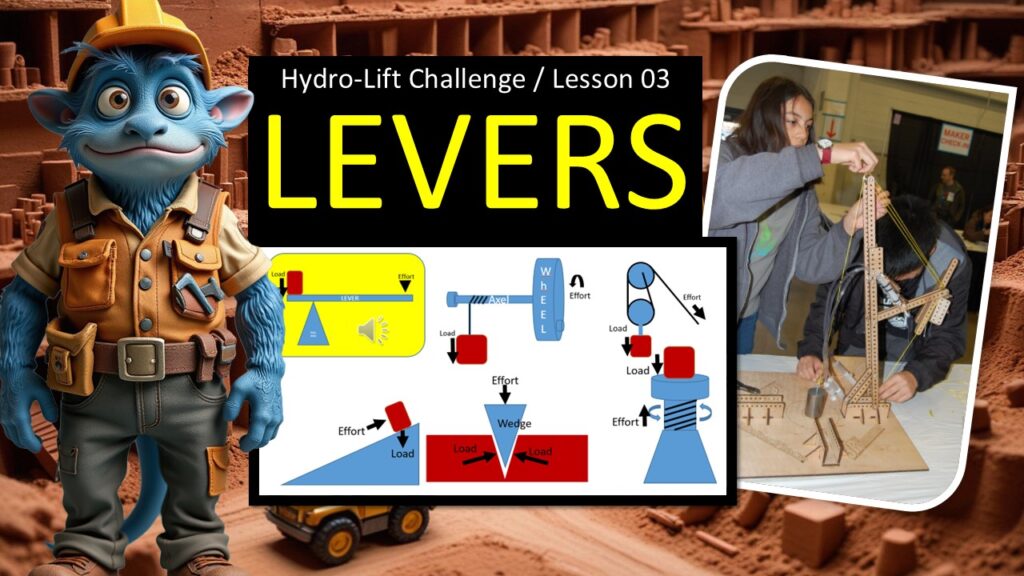
This lesson introduces students to levers, how they work, and why they are important in lifting systems. Students explore the idea of effort, load, and fulcrum, and they begin understanding how levers can give them mechanical advantage in the Hydro-Lift Challenge.
Hydro-Lift Challenge: Lesson 04 – Pulleys
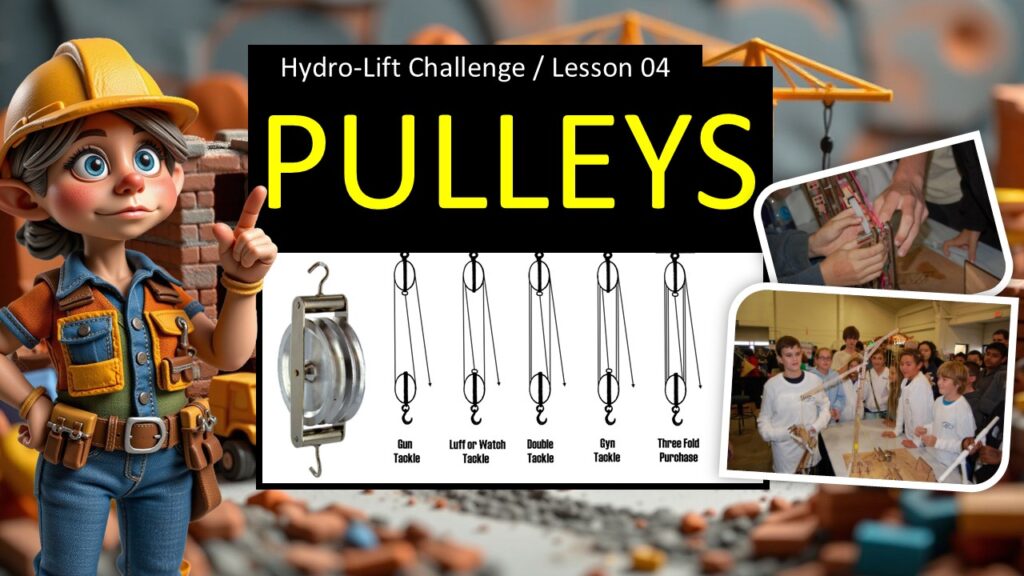
This lesson introduces students to pulleys, how they work, and why they can multiply lifting power. Students learn how pulleys change direction, reduce effort, and create mechanical advantage. They also begin to understand why pulleys are one of the most important tools in the Hydro-Lift Challenge.
Hydro-Lift Challenge: Lesson 05 – Screws, Wheels & Axles, Wedges, Inclined Planes
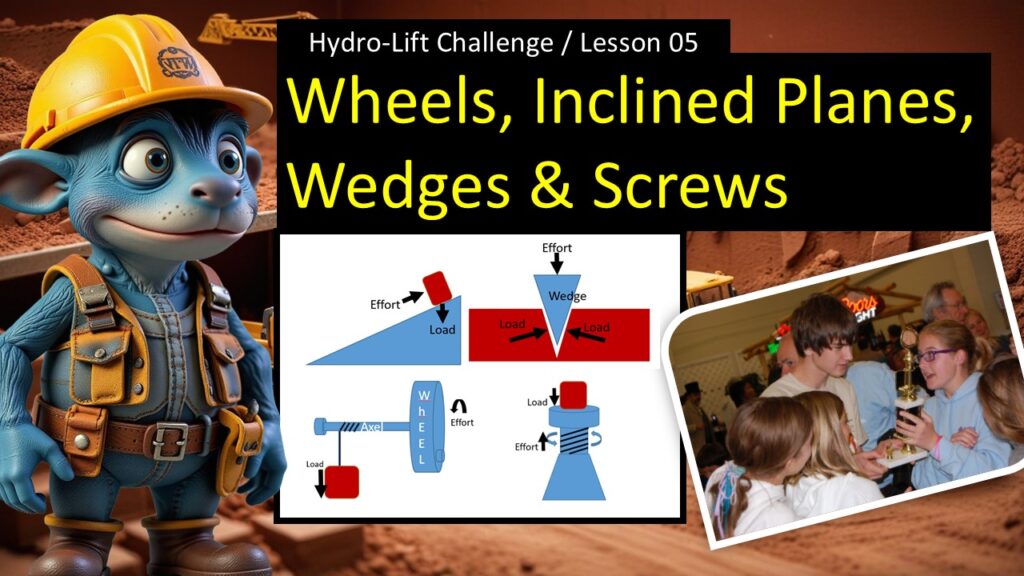
This lesson introduces the remaining simple machines: the screw, wheel and axle, wedge, and inclined plane. Students learn what each one does and how they appear in everyday life. These ideas help them see how even simple systems combine to create more complex machines like the Hydro-Lift.
Hydro-Lift Challenge: Lesson 06 – Hydraulics
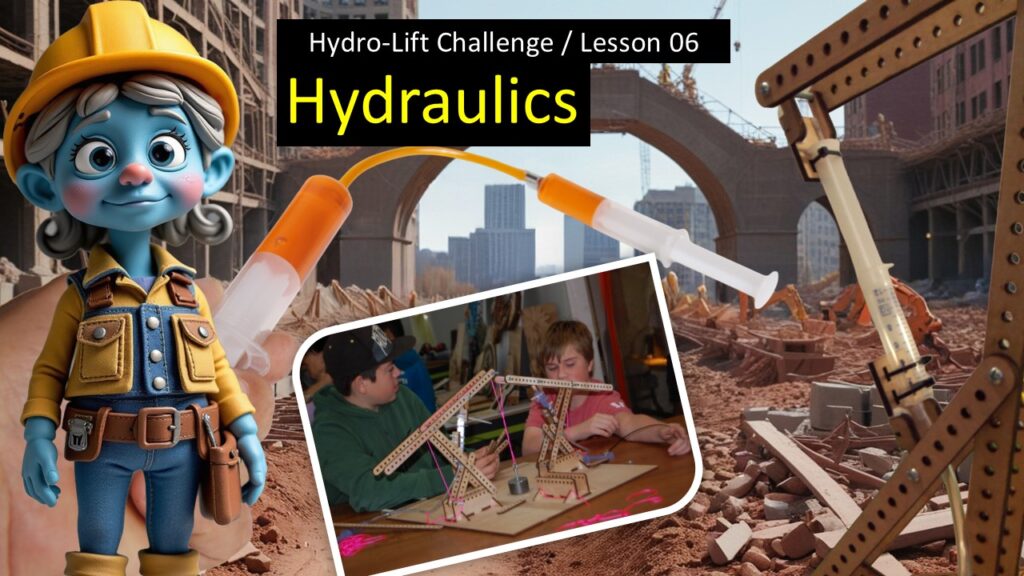
This lesson introduces students to hydraulics and how water pressure can create real lifting force. Students learn what pistons, cylinders, and tubing do, and begin seeing how hydraulics will power their Hydro-Lift device.
Hydro-Lift Challenge: Lesson 07 – The Secret Manual
This lesson shares helpful reminders, common trouble spots, and simple guidance that keeps teams from making avoidable mistakes. It is not a list of solutions. Instead, it gives students a clearer understanding of what can go wrong and how to avoid losing time during the build.